Influencers vs Ads vs Community: DTC Marketing Strategies 2026
By ClickMaking Team ·
Look, 90% of the advice out there on e-commerce marketing strategies is just... recycled garbage. It's either written by an intern who has never run a campaign or a bland AI bot. It drives me nuts.
I had a call just last week with a new D2C founder from Mumbai. He'd burned through ₹5 lakhs on Google Ads with nothing to show for it. His mistake? He followed a generic guide that told him to just “run ads.” Bad advice.
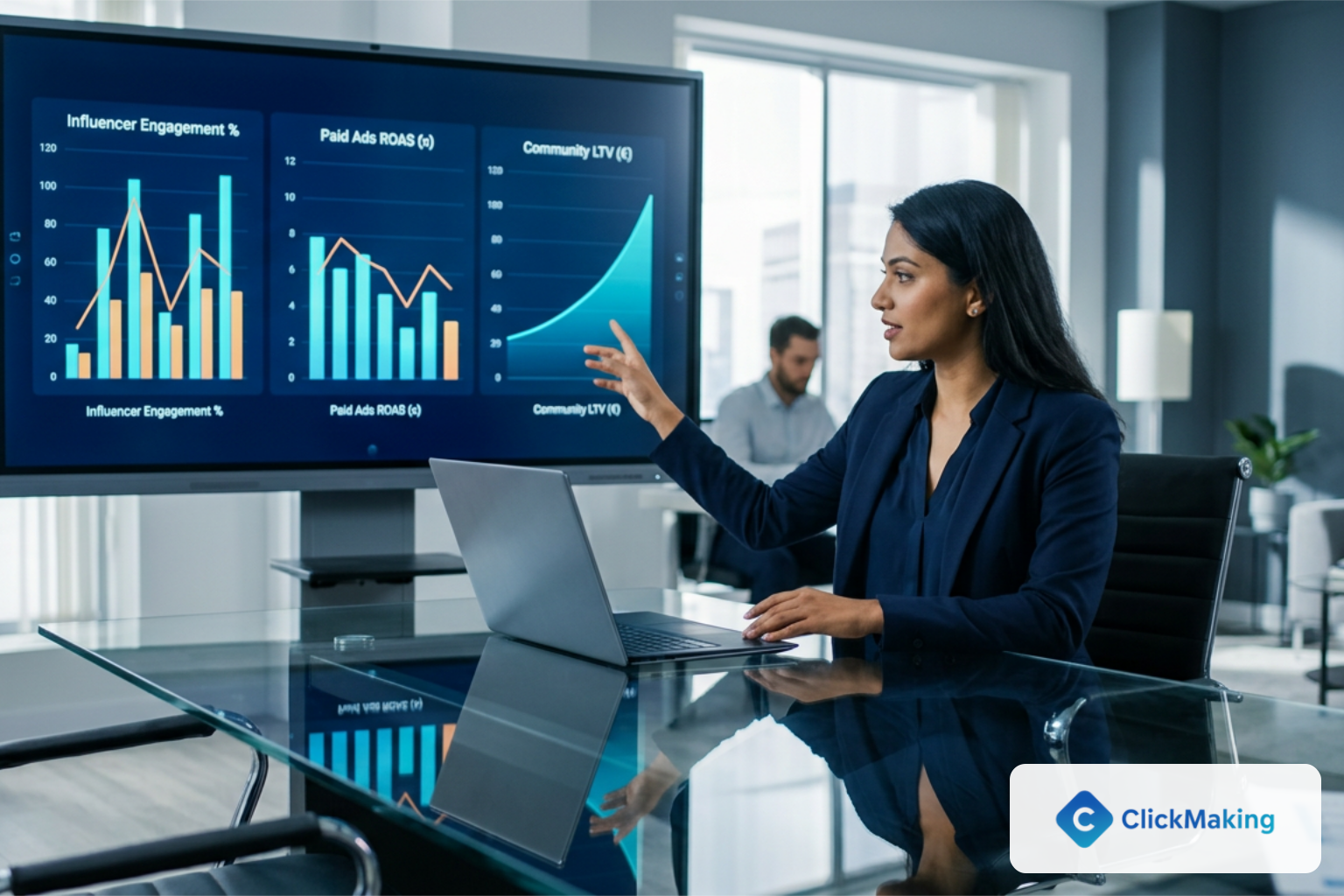
The best e-commerce marketing strategies for DTC brands in 2026 involve a mix of three core pillars: Influencer Marketing for building trust and generating content, Performance Max (PMax) ads for scalable sales, and Organic Community Building for long-term loyalty and high customer lifetime value (LTV). Choosing the right mix depends on your budget, product, and growth stage.
- Influencer Marketing: Best for building brand love and getting authentic User-Generated Content (UGC). Not just for a quick sales spike.
- Performance Max Ads: The fastest way to scale sales if you have the budget and good creative. High risk, high reward.
- Community Building: The slowest but most powerful strategy for long-term defensibility and high LTV. Think of it as building a moat.
- The Winner? There isn't one. The smartest brands like boAt and Mamaearth use a hybrid approach, using content from influencers and community to fuel their ads.
- Brands can see up to an 8 return for everyspent on influencer marketing when done right (Source: HubSpot).
- Global retail e-commerce ad spend is projected to exceed $80 billion in 2026, with a huge chunk going to automated campaigns like PMax.
- According to Sprout Social Insights, 71% of consumers who have a positive experience with a brand on social media are likely to recommend it to their friends and family. That's the power of community.
Influencer Marketing: More Than Just Pretty Pictures
Okay, let's get one thing straight. If you're using influencers just to post a photo with a discount code, you're stuck in 2019. It's one of the most misunderstood e-commerce marketing strategies out there.
Today, the real value is in generating authentic content you can reuse everywhere. I remember when our team at ClickMaking started focusing on this for a client. Instead of paying for one post, we contracted 10 micro-influencers to create 5 videos each. We suddenly had 50 high-quality, authentic videos to use in our paid ads. The game completely changed. Humari ClickMaking content marketing service exactly iske liye bani hai — check it out.
The Power of Authentic UGC
User-Generated Content (UGC) is gold. It’s not polished, it’s not perfect, and that’s why it works. When a real person shows how they use your product, it builds trust that a slick corporate video never can.
Think about Mamaearth. Their whole empire was built on the back of mommy bloggers and Instagram influencers sharing their genuine experiences. They didn't start with TV ads; they started with real people. It’s a masterclass in modern SEO & content marketing, where content comes from the users themselves.
Finding the Right Influencers
Stop chasing the big names with millions of followers. Their engagement is often terrible, and their audience is too broad. We've seen way better results with micro-influencers (10k-50k followers). They’re more affordable, have a niche audience, and their followers actually trust them.
"Hiring one celebrity for ₹20 Lakhs is almost always a worse investment than hiring 100 micro-influencers for ₹20,000 each. The content library and targeted reach you get from the latter is unbeatable." — Akshay Patel, Founder, ClickMaking
Performance Max Ads: The High-Speed, High-Stakes Game
Ah, Performance Max (PMax). Google’s powerful, mysterious, and sometimes frustrating black box. This is the strategy you use when you want to pour fuel on the fire and scale fast. It’s a core part of our PPC advertising services at ClickMaking.
But here’s the thing. PMax is hungry. You need to feed it constantly. Feed it data, feed it conversions, and most importantly, feed it a LOT of creative assets. Photos, headlines, and especially videos. For deeper insights, ppc for real estate 2026 why your leads are junk and how to fix it provides excellent data on this topic.
Creative is the New Targeting
With PMax, you don't have a lot of control over keywords or placements. Google's AI handles that. Your job is to provide the best possible creative. This is where the fit with influencer marketing comes in. Those authentic videos your influencers made? They are PMax fuel.
We run PMax campaigns for clients across India and the US, and the campaigns that win are always the ones where we test 5-10 video variations at once. The AI figures out which creative resonates with which audience segment and serves it. It's powerful, but it's not magic.
Budget and Patience are Key
Don’t expect PMax to work miracles with a ₹500/day budget. It needs room to learn. We usually recommend a minimum of ₹3,000-₹5,000 per day for at least 4-6 weeks to let the algorithm figure things out. If you pull the plug too early, you’ve just wasted money.
It's a tough pill to swallow, but it's the truth. If your budget is tight, it's probably not the right strategy to start with. You might be better off with more controlled aFix Your Site: My 2026 Technical SEO Audit Checklistnd a solid site foundation first. ClickMaking AI Chatbots Vs Forms Why We Get 3x More Leads In 2026 ke data ke hisaab se, yeh strategy kaam karti hai.
Organic Community Building: The Slow-Burn Moat
This is my favorite strategy, probably because it's the hardest to measure and the most powerful in the long run. Building a community is about creating a space where your customers can connect with you and each other. It’s not about blasting them with promotions.
Brands like boAt did this brilliantly with their “boAtheads” community. They created an identity, a tribe. People don't just buy their headphones; they buy into the boAthead lifestyle. That’s a competitive advantage that money can't buy easily.
Where to Build Your Community?
It could be anywhere your customers hang out. A private Facebook Group, a Discord server, a WhatsApp group, or even just a dedicated Instagram page where you heavily feature user content. The platform is less important than the intention. GIFT City fintech firms often work with a specialised digital marketing services Gandhinagar for LinkedIn Ads and B2B SEO. If you operate out of Ahmedabad, Surat, Vadodara or Rajkot, the full-service marketing agency Gujarat shortlist is a practical starting point. For a practitioner's view, trusted digital marketing partner Ahmedabad ke case studies bahut helpful hain.
The goal is to provide value beyond the product. Exclusive content, early access to new launches, Q&As with the founder, or just a fun place to chat. This is where you can also use smart AI automation to manage conversations and answer common questions, so it doesn't consume your entire day.
Measuring the Unmeasurable
How do you measure the ROI of a community? It’s tricky. The direct sales might be low. But what you get is invaluable: higher Customer Lifetime Value (LTV), lower churn, and a constant source of product feedback. You're building an army of advocates. That's the ultimate goal of all e-commerce marketing strategies. For deeper insights, Who Is The Best SEO Expert In Gujarat The 2026 Answer provides excellent data on this topic.
Comparing the Top E-commerce Marketing Strategies
So, how do these three stack up against each other? I had our marketing team put together a quick comparison table during our Monday standup. It's a bit simplified, but it gets the point across.
Factor Influencer Marketing Performance Max Ads Organic Community Primary Goal Brand Trust & Content Generation Scalable Sales & ROAS Loyalty & High LTV Speed to Results Medium (2-4 weeks) Fast (1-2 weeks) Very Slow (6-12 months) Upfront Cost Medium to High High Low (but time-intensive) Best For New brands, visually-driven products (fashion, beauty) Established brands with proven funnels and good margins Passion-driven brands with high repeat purchase potential Biggest Risk Choosing the wrong influencer, brand safety issues Burning cash quickly with poor creative or low margins Losing momentum, becoming a ghost town Our Verdict Essential for top-of-funnel and creative. Use for content, not just direct sales. The best tool for scaling, but only when you have the right fuel (creative & data). A non-negotiable long-term play. Start day one, even if it's small. What Most Guides on E-commerce Marketing Strategies Miss
Most articles you read on the HubSpot Marketing Blog or other big sites give you the textbook version. Here’s some real talk from my experience running ClickMaking.
1. The Post-Purchase Experience IS Marketing
Everyone is obsessed with customer acquisition. But what happens after they click “buy”? Your fulfillment speed, your packaging, the thank you email... that's all marketing. A great unboxing experience can lead to UGC that's more powerful than any ad.
A poor one guarantees they'll never buy again. It’s amazing how many brands need a complete website redesign just to make their post-purchase flow make sense. Industry leaders at Neil Patel's SEO Guide have highlighted this trend.
2. Your Ad Creative Has a Shorter Lifespan Than a Goldfish
You can't use the same ad creative for three months and expect it to work. Ad fatigue is real, sach mein. Our paid ads team refreshes creative every 2-3 weeks for our top-performing clients. You need a system for constantly producing new content. This is another reason why influencer marketing as a content engine is so vital.
3. Renting an Audience is Not the Same as Owning One
Relying 100% on Meta or Google ads means you're just renting their audience. They can (and will) increase the rent anytime they want via algorithm changes or higher CPMs. Building your own email list and community is how you *own* your audience. It's an asset that compounds over time.
"Too many DTC founders are addicted to the instant gratification of ads. They're building their house on rented land. True, sustainable growth comes from assets you own: your brand, your email list, and your community." — Akshay Patel, Founder, ClickMaking
Real Implementation Example: Our Ahmedabad D2C Client
Let me make this real for you. We started working with a D2C skincare brand based in Bodakdev, Ahmedabad, in early 2025. Let's call them "Aura Skin". They had amazing products but were struggling to grow beyond friends and family.
The Plan: A Hybrid Strategy
- Phase 1 (Month 1): Content Engine. We identified and onboarded 15 local micro-influencers in the beauty space. The goal wasn't sales, it was purely to get a library of authentic video testimonials and how-to's. Budget: ₹1.5 Lakhs.
- Phase 2 (Month 2): Ad Amplification. We took the top 10 videos from Phase 1 and launched a PMax campaign. The ads looked like real customer reviews, not polished commercials. We also built a dedicated landing page for this campaign. Budget: ₹1.5 Lakhs ad spend.
- Phase 3 (Ongoing): Community Loop. We created an exclusive WhatsApp group for the first 200 customers from the campaign. We offered them early access to a new product and asked for feedback. This group is now a hotbed for insights. For more inspiration, check out how other Gujarati Food Brands: Your D2C Empire Plan have built communities.
The Results (After 3 Months):
- Return on Ad Spend (ROAS) jumped from a dismal 1.5x to a healthy 4.2x.
- Customer Acquisition Cost (CAC) dropped by 35%.
- The WhatsApp community drove 12% of total sales in the third month through repeat purchases, with zero ad spend.
- Their Instagram page grew organically by 5,000 followers who were genuinely interested in the brand.
This is the power of integrated e-commerce marketing strategies. They don't work in silos; they feed each other.
Actionable Takeaways
Okay, enough talk. Here’s your checklist. If you're serious about growing your e-commerce brand, start doing these things today. For deeper insights, Moz SEO Blog provides excellent data on this topic.
- Audit Your Current Strategy: Are you reliant on only one channel? That's a huge risk.
- Start a Micro-Influencer Program: Find 5-10 influencers with under 20k followers in your niche. Pay them for content rights, not just a single post.
- Build a “Creative Library”: Organize all the content from influencers, customers, and your own shoots. This is your ammo for ads.
- Test PMax (If Ready): If you have a budget of at least ₹1 Lakh/month and a solid creative library, it's time to test PMax.
- Start Your Community (Today): Create a WhatsApp or Facebook group. Invite your top 20 customers. Just start the conversation. Don't overthink it.
- Map Your Post-Purchase Journey: What email does a customer get after buying? Is the packaging delightful? Fix this. It's low-hanging fruit.
- Read the Shopify Blog religiously: Stay updated on DTC trends. It's one of the best resources out there, and our whole team uses it.
- Stop Ignoring Chatbots: A simple AI bot on your site can handle 80% of queries and capture leads when you're asleep. Stop clinging to dead Contact Forms Are Useless. AI Bots Get 3x More Leads.
Executing all of this can be overwhelming, I get it. This is literally what we do all day at ClickMaking. If you feel stuck, it might be time to talk to people who have been there before. Check out the details on about our agency to see if we're a good fit.
The world of e-commerce is noisy, yaar. The only way to win is to build a brand that people actually care about. These strategies, when combined, help you do just that.
If you're trying to figure out the right mix for your brand and want a second opinion from someone who's in the trenches every day, feel free to book a free consultation with our team. We can take a look at what you're doing and give you some honest, actionable advice.
SEO & Content Marketing services · Google Ads / PPC · Website Design · Book a Free Consultation
https://www.clickmaking.com/blog/influencers-vs-ads-vs-community-dtc-marketing-strategies-2026

