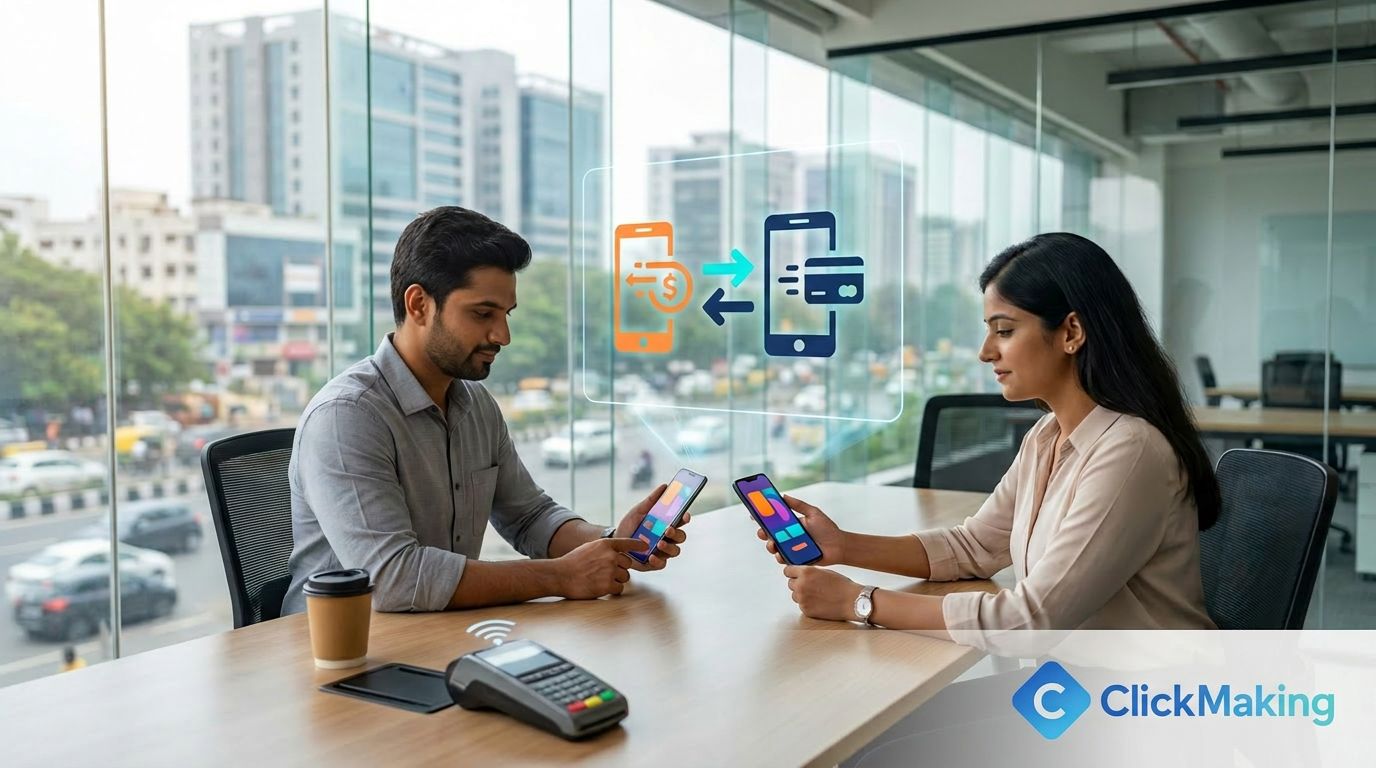
UPI & Digital Payments: Reshaping Indian Digital Marketing in 2026
By ClickMaking Team ·
Look, if you're still thinking of digital marketing in India without putting UPI front and center, you're missing the bus. Seriously, that bus left the station like, three years ago. I've seen too many businesses, even big ones, underestimate the sheer power of instant payments here.
Here's the thing: India isn't just adopting digital payments; we're living and breathing them. From the local chaiwala accepting Google Pay to major e-commerce giants pushing UPI offers, it's everywhere. This isn't just about transactions; it's about radically reshaping how customers discover, engage, and convert.
 But then came UPI. It was a literal game-changer, not just for payments but for the entire customer journey. Suddenly, completing a purchase was as simple as scanning a QR code or entering a 6-digit PIN. Bilkul, that easy!

The Old Funnel: A Relic of the Past?
Remember the good old days? Awareness, interest, desire, action – the classic AIDA funnel. It worked, sure. But it was often clunky, especially at the 'action' stage here in India. Cash on Delivery (COD) was king, causing high return rates and logistical headaches for everyone. We at ClickMaking used to spend hours optimizing checkout pages, trying to shave off seconds, reduce friction. Abandoned carts were our biggest enemy. People would get to the payment gateway, see too many steps, and just bounce. It drove us nuts, honestly.
But then came UPI. It was a literal game-changer, not just for payments but for the entire customer journey. Suddenly, completing a purchase was as simple as scanning a QR code or entering a 6-digit PIN. Bilkul, that easy!
How UPI Reinvents the Digital Marketing Funnel
So, how exactly are UPI and other digital payment methods – think Net Banking, cards, wallets – shaking things up? It's not just about paying faster. It's about building trust, enabling micro-conversions, and creating entirely new marketing touchpoints. Our team discussed this in our Monday standup last week, and the consensus was clear: it’s foundational now.1. Awareness & Interest: Beyond Ads, Into Offers
Most people think UPI only impacts the final sale. Nope. It's pushing awareness in new ways. Brands like Zomato and Swiggy constantly flash 'Pay with Paytm for 10% cashback' or 'Get ₹50 off with PhonePe'. These aren't just payment options; they're direct marketing hooks. We're seeing smaller businesses, like local boutiques in Ahmedabad, using QR codes in their social media posts. 'Scan to explore our new collection and get a discount!' This creates immediate engagement. Users don't just see an ad; they see an offer that's instantly actionable.2. Consideration & Conversion: The Frictionless Flow
This is where UPI truly shines. The traditional funnel had a huge drop-off at the payment step. Now? It’s practically a single tap. A client of ours in the D2C apparel space saw their cart abandonment rate drop by nearly 20% after heavily promoting UPI as the primary payment method. Speaking of conversion, cutting your CPL is all about removing friction. UPI does exactly that. Think about Lenskart or Mamaearth – they make the purchase flow so smooth, you barely think about it. That instant gratification is powerful. Our SEO team tested this, and faster checkout directly correlates to better conversion metrics.
3. Loyalty & Advocacy: Rewards and Re-engagement
Here’s where it gets interesting. Digital payments aren't just transactional; they're relationship builders. Apps like Google Pay and PhonePe have reward systems, scratch cards, and gamified experiences. Brands can tap into this directly. Imagine offering exclusive discounts for repeat UPI payments, or loyalty points that automatically accumulate. This fosters a sense of community and value. Our work with AI automation often involves connecting these payment rewards directly into CRM systems for hyper-personalized marketing. It's smart automation working for you.Old vs. New: Marketing Funnels in the Digital Payment Era
Let's break it down, old-school vs. new-school, Indian style.The Traditional Digital Marketing Funnel (Pre-UPI Dominance)
**Pros:** * Clear, well-understood stages. * Standard metrics for each stage. * Worked well for desktop-first experiences. **Cons:** * High friction at the 'Action' stage, especially with COD or complex gateways. * Limited real-time engagement beyond ads. * Customer data often siloed between marketing and payments. * Slower feedback loops on purchase intent. **Verdict:** Still relevant for complex B2B sales or industries with longer sales cycles, but a bottleneck for Indian e-commerce and D2C.The Digital Payment-Integrated Funnel (The 2026 Reality)
**Pros:** * **Frictionless Conversion:** UPI makes transactions instant, boosting conversion rates significantly. We've seen clients gain up to 30% jump in successful payments. * **Enhanced Engagement:** Payment apps become marketing channels. Offers, cashbacks, and rewards drive repeat purchases and new customer acquisition. boAt does this brilliantly. * **Richer Data:** Linking payment data with marketing insights allows for hyper-personalized campaigns. You know exactly what someone bought, when, and how they paid. * **Micro-Conversions:** Small, quick payments enable new business models, like paid content snippets or instant digital product downloads. * **Trust Building:** Secure, government-backed payment systems like UPI build immense trust with Indian consumers. **Cons:** * Requires tighter integration between marketing platforms, payment gateways, and CRM systems. This isn't always plug-and-play, tbh. * Brands need to continuously innovate their payment-linked offers to stand out in a crowded market. * Can lead to over-reliance on discounts if not managed strategically. **Verdict:** The only way forward for consumer-facing businesses in India. It's faster, more efficient, and builds deeper customer relationships. If you're not here, you're losing money.Actionable Takeaways for Your 2026 Strategy
So, what should you do? Don't just slap a 'Pay with UPI' button on your checkout. That's bare minimum. You need to integrate it throughout your entire funnel. Here’s what we suggest at ClickMaking, based on our experience with clients from Mumbai to Chennai: 1. **Early Offer Integration:** Promote UPI/digital payment offers in your awareness campaigns. Think social media ads, email newsletters, even SMS blasts. Make the discount part of the initial hook. 2. **Seamless Checkout Design:** Prioritize UPI as the default or most prominent payment option. Make it one-click if possible. Test loading speeds. Mobile-first, always. Our Shopify Blog readers know this is key. 3. **Post-Purchase Engagement:** Use payment apps for loyalty programs. Send exclusive offers directly to customers who paid via UPI last time. This builds a powerful feedback loop. 4. **Content Marketing with Payment Perks:** Create blog posts or videos (like this one!) that highlight the ease and benefits of paying digitally for your products. Explain how to use UPI for first-time buyers. 5. **Data Unification:** This is huge. Link your marketing analytics, CRM, and payment data. Understand customer lifetime value (CLTV) not just from purchases but from payment behavior. This is why Moz Blog constantly stresses data integration. I'll be honest, getting all these systems talking can be complex. But it's worth every single rupee. If you're wondering how to implement this for your business, maybe it's time to book a free consultation with us. We live and breathe this stuff.For deeper insights on marketing research, check out HubSpot Marketing Blog.
Frequently Asked Questions
How do UPI and digital payments impact customer acquisition in Indian digital marketing?
UPI and digital payments simplify the initial purchase, reducing friction for new customers. Special offers linked to payment apps act as direct incentives, drawing in users who are already accustomed to paying digitally for everyday needs. This helps acquire customers efficiently.Can UPI improve conversion rates for e-commerce businesses in India?
Absolutely. UPI significantly shortens the checkout process, minimizing abandoned carts caused by lengthy forms or complex payment gateways. The instant nature of UPI transactions leads to higher completion rates, directly boosting e-commerce conversion metrics in Indian digital marketing funnels.What role does loyalty play with digital payments in the marketing funnel?
Digital payments, especially through apps with built-in reward systems, foster customer loyalty. Brands can offer exclusive discounts or loyalty points for repeat digital transactions, encouraging customers to return. This strengthens the post-purchase relationship and drives advocacy.Are there specific strategies for small businesses to use UPI in their digital marketing?
Small businesses can leverage UPI by displaying QR codes on social media posts for instant purchases, running localized cashback offers via payment apps, and using WhatsApp Business to share payment links. This makes purchasing accessible and immediate, even for micro-businesses. You also need a strong visual identity to stand out.How can ClickMaking help integrate UPI into my digital marketing strategy?
At ClickMaking, we analyze your current funnel, identify friction points, and design a comprehensive strategy to integrate UPI and digital payments. From optimizing checkout flows to creating payment-linked offers and data unification, we help you capitalize on this powerful trend. Get in touch to discuss your needs. We're based in Ahmedabad, but serve clients globally.SEO & Content Marketing services · Google Ads / PPC · Website Design · Book a Free Consultation
https://www.clickmaking.com/blog/upi-digital-payments-reshaping-indian-digital-marketing-in-2026