Marketing Automation vs. AI Automation: Your 2026 Guide
By ClickMaking Team ·
What's the Deal with Automation in 2026?
Okay, so everyone's buzzing about automation, right? It's like the new 'big data' of a few years back. But honestly, most business owners I talk to – especially here in Ahmedabad – kinda mix up marketing automation and AI automation. They're related, sure, but definitely not the same thing.
This confusion can cost you a lot, not just in wasted tech subscriptions, but in missed opportunities. You might think you're getting cutting-edge AI when you're really just setting up some basic email sequences. And that's not going to move the needle much in 2026.
The truth? Understanding the difference is your first step to actually using these tools effectively. We've seen clients at ClickMaking make incredible strides once they get this clear. It's all about picking the right tool for the right job, you know?
Marketing Automation vs. AI Automation: The Core Differences
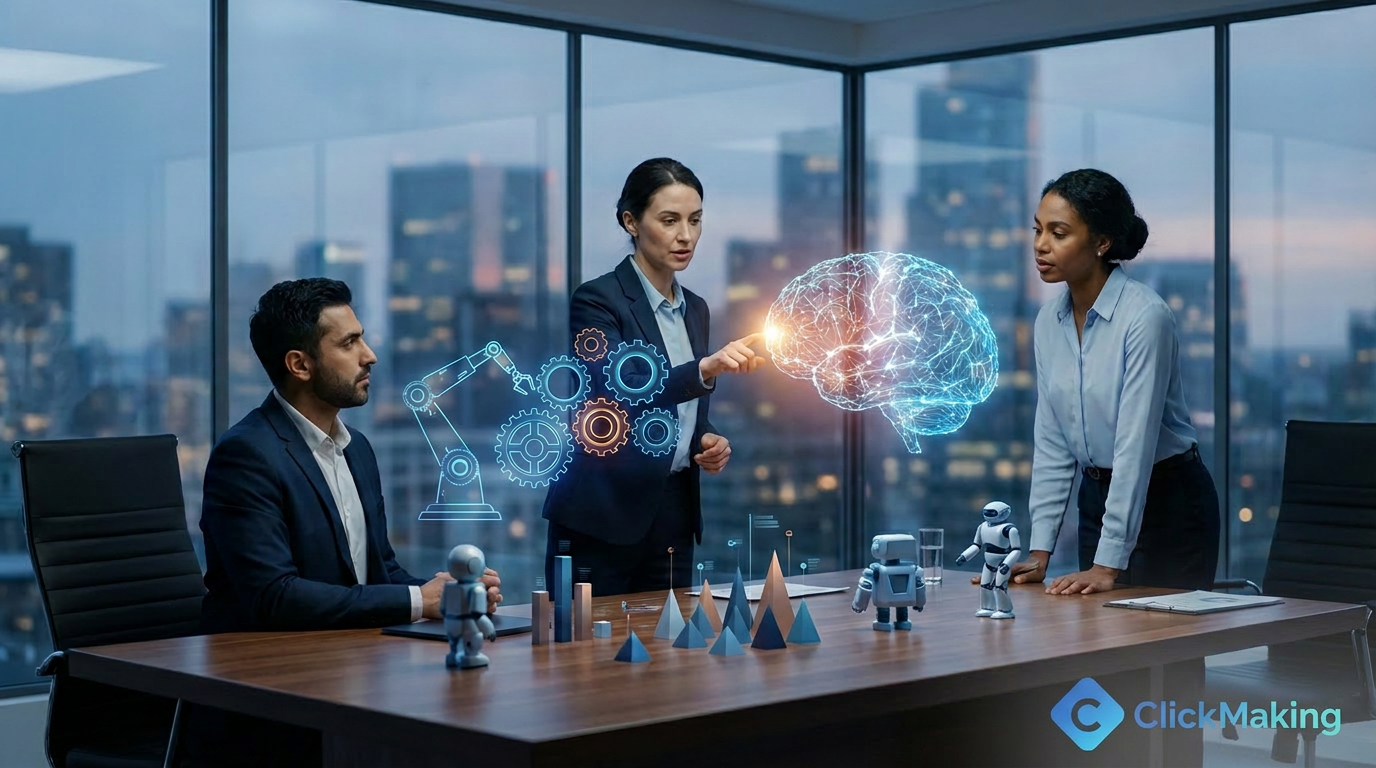
Let's cut right to it. What's the fundamental difference between marketing automation and AI automation? Think of it like this: marketing automation is a sophisticated car, and AI automation is the self-driving feature on that car. Both get you somewhere, but one needs constant human input, the other learns and adapts. If you're looking for help, check out our content marketing company Ahmedabad — we've delivered amazing results.
Marketing automation is about setting up pre-defined rules and workflows. "If X happens, then do Y." It's logic-based, very structured. Our team at ClickMaking has been using tools like HubSpot and Salesforce Pardot for years to implement these for clients. It works like magic for repetitive tasks.
AI automation, however, is about machines learning from data, making predictions, and optimizing outcomes without explicit programming for every scenario. It's adaptive, predictive, and often, generative. This is where things get really interesting, and honestly, a bit mind-blowing sometimes.
The 'If This, Then That' of Marketing Automation
So, marketing automation is all about efficiency. You're creating a system that handles routine marketing tasks automatically. This frees up your team to focus on strategy and creativity – things only humans can truly do. It's a huge time-saver, bilkul!
Think about an email campaign. With marketing automation, you set up a welcome sequence for new subscribers. When someone signs up, they get Email 1. Three days later, Email 2. If they click a product link, they get Email 3 about that product. If not, maybe a re-engagement email. It's all pre-set. This is where affordable SEO services Ahmedabad becomes a game-changer for your business.
We recently helped a B2B SaaS client in Bangalore set up a new lead nurturing flow using marketing automation. They saw a 25% increase in lead-to-MQL conversion within four months just by automating follow-ups. It's powerful, but it needs your rules.

Tools like Mailchimp, ActiveCampaign, and the marketing suite within HubSpot are prime examples. They let you build customer journeys, schedule social media posts, and manage CRM data. It’s about doing more with less effort, consistently.
The downside? It's only as smart as the rules you give it. If market conditions change, or customer behavior shifts, your automation won't adapt unless you manually go in and change the rules. You're the conductor, the automation is the orchestra playing your score.
The Learning & Adapting Power of AI Automation
Now, AI automation — this is a different beast. Instead of fixed rules, AI tools learn from vast datasets. They identify patterns, predict future behavior, and even generate content or optimized strategies on their own. It's about intelligence, not just efficiency. This is where content marketing services in Ahmedabad becomes a game-changer for your business.
Take personalized product recommendations on an e-commerce site, for instance. Zomato wouldn't just recommend what you ordered last time. It learns your preferences, time of day, even weather (if that data's available), and suggests new dishes. That's AI working its magic.
Our SEO team at ClickMaking has been experimenting with AI tools for keyword research and content optimization. We've seen AI suggesting entirely new content clusters based on search intent we hadn't even considered. It's like having a super-smart analyst on steroids.
AI automation can dynamically adjust bidding strategies for ads in real-time, predict customer churn, or even personalize website content for individual visitors on the fly. It's not just "if this, then that"; it's "if this, then what's the optimal next step based on all available data?" Industry leaders at State of Marketing Report have highlighted this trend.
A client of ours, a small fashion brand, used AI-driven personalization on their custom website development and saw a 15% uplift in conversion rate last Diwali season. The AI dynamically changed hero banners and product showcases based on visitor demographics and past behavior. Pretty neat, right? Our team specializes in paid advertising agency and can help you grow.
Where Marketing Automation Shines (and Where It Doesn't)
Look, marketing automation isn't going anywhere. For predictable, repeatable tasks, it's gold. It's your workhorse, handling the grunt work so your team can soar. Here’s where it truly excels:
Email sequences for onboarding, nurturing, or post-purchase follow-ups. Scheduling social media posts consistently throughout the week. Basic lead scoring based on website activity or email opens. Simple CRM updates and data management. These are all perfect for marketing automation.
It’s also fantastic for ensuring brand consistency. Every customer gets the same level of attention, the same standard messaging. That's super important for building trust. Think about how major brands like Nykaa or Lenskart manage their immense customer base; automation plays a huge role in their communication.

However, it falls short when you need deep personalization or rapid adaptation. If your marketing strategy requires complex decision-making, understanding nuances in customer sentiment, or predicting future trends, marketing automation will hit its limits. You'll need to step in and adjust those rules manually. If you're looking for help, check out our online marketing strategy — we've delivered amazing results.
The Powerhouse of AI Automation: When to Use It
AI automation enters the scene when you need intelligence, not just rote execution. It's the brain of your marketing operations – constantly learning, testing, and optimizing. This is where you get truly personalized experiences and predictive insights.
Think about dynamic ad creatives that change based on user context. Or content recommendations that genuinely surprise and delight. AI can analyze millions of data points to find patterns that a human simply couldn't. It's about finding hidden opportunities and pre-empting problems.
For instance, one of our clients in the travel sector used an AI tool to predict peak booking times and adjust their ad spend accordingly. They saw a 47% improvement in ROAS during that campaign period. The AI identified micro-trends that traditional analytics just didn't catch. As recommended by Wix Marketing Blog, businesses should focus on this strategy.
AI is also fantastic for search engine optimization. Tools like Surfer SEO or Clearscope, which incorporate AI, help analyze top-ranking content and tell you exactly what terms, questions, and topics you need to cover to rank. Our content writers swear by these for detailed outlines.
But wait, there's a downside too. AI tools can be more complex to set up and often require larger datasets to 'train' them effectively. They're also not cheap, generally. And sometimes, their 'black box' nature means it's hard to understand *why* they made a certain decision. Trust me, we've had those discussions in our Monday standups.
Choosing Between Marketing Automation and AI Automation for Your Business
So, which one should your business use? Honestly, it's rarely an either/or situation. Most businesses, especially growing ones, will benefit from a blend of both. It's about layering intelligence on top of efficiency.
Start with marketing automation for your foundational tasks. Get those email sequences dialed in. Automate your social media scheduling. Make sure your CRM is updated automatically. This builds a strong, efficient base. If you need help, you can always book a free consultation with us at ClickMaking. According to GoDaddy Business Resources, this approach delivers solid results.
Once you have a solid automated foundation, then start looking at where AI can add predictive power and deeper personalization. Where do you have large amounts of data that aren't being fully utilized? Where are your current marketing efforts hitting a plateau?
Practical Steps for Implementation in 2026
- Audit Your Current Processes: What repetitive tasks are eating up your team's time? Where are you seeing inconsistencies in communication? These are prime candidates for marketing automation.
- Identify Data-Rich Areas: Do you have tons of customer purchase history? Website behavior data? Ad campaign performance data? This is where AI can shine, finding patterns and making predictions.
- Set Clear Goals: What do you want to achieve? Increase email open rates by 10%? Reduce customer churn by 5%? Improve ad ROAS by 20%? Your goals will dictate which type of automation is most appropriate.
- Start Small, Test, and Scale: Don't try to automate everything at once. Pick one area, implement a solution (marketing automation first, then AI if applicable), measure the results, then expand. This is our approach at ClickMaking – incremental improvements.
- Invest in Training: These tools are only as good as the people using them. Ensure your team understands how to operate and optimize them. We regularly run workshops for our clients on new tools, showing them how to get the most out of their tech stack.
For example, if you're a local restaurant in Mumbai, you might use marketing automation for loyalty programs and birthday offers. But then, you could use AI to analyze customer order patterns and suggest new menu items or personalized offers during off-peak hours to drive traffic. See the difference? Even Google Ads Resources agrees — yeh approach 2026 mein bahut effective hai.
Seriously, understanding the nuances between marketing automation vs. AI automation is key to staying competitive. What worked five years ago isn't cutting it today. As HubSpot Marketing Blog often points out, customer expectations for personalization are higher than ever.
The Future is Hybrid: Combining Both for Maximum Impact
The sweet spot for most businesses in 2026 is a hybrid approach. Marketing automation handles the volume and consistency. AI automation adds the brainpower, the adaptability, and the personalization. It’s like having a well-oiled machine with a super-smart pilot. Industry leaders at AI-Driven Landing Page Principles for Global Conversion Lift (2026) have highlighted this trend.
Imagine an e-commerce store like boAt. They use marketing automation for sending out order confirmations and shipping updates. But for product recommendations, dynamic pricing, or targeted ad campaigns based on browsing history and purchase intent, they're definitely leaning on AI automation. That's how you build massive brands today.
Our team sees this playing out across all industries. From small startups to large enterprises, those who effectively combine these two forms of automation are the ones seeing significant improvements in customer engagement, operational efficiency, and ultimately, revenue. It's not just about technology; it's about smart strategy. You can reach out to us to discuss your specific needs.
Don't be fooled by vendors claiming their 'marketing automation' tool is also 'AI-powered' when it just has a fancy reporting dashboard. Dig deep into the capabilities. True AI learns; it doesn't just execute predefined tasks. Ask the hard questions, evaluate with a critical eye. If you're looking for professional digital marketing services, we can help demystify this for you.
For deeper insights on social media trends, check out Social Media Examiner. According to Neil Patel's SEO Guide, this approach delivers solid results.
For deeper insights on search marketing news, check out Search Engine Journal.
Frequently Asked Questions
What is the main difference between marketing automation and AI automation?
Marketing automation executes predefined rules and workflows (if X, then Y) for repetitive tasks like email sequences. AI automation learns from data, predicts outcomes, and adapts strategies dynamically without explicit programming for every scenario.
Can small businesses use AI automation effectively?
Absolutely! While often perceived as complex, many AI tools are becoming more accessible. Small businesses can start with AI-powered features within existing platforms (like smart bidding in ad platforms) or specialized tools for content optimization or predictive analytics.
Which is better for lead generation, marketing automation or AI automation?
Both are crucial. Marketing automation handles initial lead capture, nurturing, and scoring efficiently. AI automation can then enhance lead generation by identifying high-value leads, predicting conversion likelihood, and optimizing ad targeting for better ROI. Moz SEO Blog ke data ke hisaab se, yeh strategy kaam karti hai.
How does AI automation impact customer experience?
AI automation significantly enhances customer experience through deep personalization. It allows for highly relevant product recommendations, dynamic website content, personalized customer service bots, and tailored communications based on individual preferences and behavior, making interactions more meaningful.
What are some common examples of marketing automation?
Common examples include automated email drip campaigns (welcome series, abandoned cart reminders), scheduled social media posts, lead scoring based on website activity, automated CRM updates, and basic customer segmentation for targeted messaging. It's all about consistency and efficiency.
SEO & Content Marketing services · Google Ads / PPC · Website Design · Book a Free Consultation
https://www.clickmaking.com/blog/marketing-automation-vs-ai-automation-your-2026-guide